

Passengers awaiting disrupted flights

What Passengers Expect From Airlines During Delays & Cancellations

Flight disruptions aren’t new-but what passengers expect during those disruptions has changed more in the last two years than it has in the past two decades.

In 2025 alone, 36% of air travelers were hit with cancellations, up from 24% in 2023. That means one out of every three passengers walked into an airport in 2025 and experienced a disruption that likely ruined their schedule, their mood, or sometimes their whole trip.

Yet the greater surprise is this:

In fact, only one in three passengers reported satisfaction with how airlines communicated, proving that the real frustration isn’t just the delay — it’s the silence, the uncertainty, and the feeling of being left alone to figure things out.

And here’s another powerful insight:

For 64% of passengers, SMS is the preferred first notification of delay because it works instantly, even without Wi-Fi or data.

Put it all together, and the message is loud and clear:

Passengers want airlines to communicate better, faster, and more personally – especially when things get chaotic.

This blog breaks down, in detail, what passengers expect when delays and cancellations occur, what the insights of 2025 reveal, and how modern solutions such as Predictive Disruption Intelligence, Self-Service Portals, airline AI chatbots, and real-time notification systems enable airlines to meet those expectations.

Key Takeaways

  • Passengers judge airlines more on disruption handling than on flight service.
  • 64% Prefer SMS-first Communication During Delays.
  • Self-service, chatbots, and predictive intelligence are now table-stakes capabilities.
  • More than ever, real-time updates and just rules count.
  • VoyagerAid serves airlines seeking to modernize disruption management end-to-end.

Rising Passenger Expectations in the Era of Real-Time Communication

For passengers, the biggest frustration isn’t always the delay-it’s the lack of information.

They don’t want a vague “stay tuned.” They want clarity, and they want it now.

Real-Time Passenger Communication has become a necessity for this reason.

Passengers expect:

  • Instant notifications
  • Channel-specific updates: SMS, WhatsApp, email, app
  • Clear timelines
  • Correct reasoning
  • And since 64% prefer SMS, an automated real-time airline notification system becomes the backbone of trust.

Whether it is a delay of 20 minutes or a full flight cancellation, automated IROPS notifications provide what passengers want most: certainty in uncertain moments.

Instant Digital Support via Smarter Airline Chatbots

When disruption hits, many thousands of passengers turn to call centers at the same time, and overload is inevitable.

Yet passengers expect immediate assistance.

This is exactly where airline AI chatbots shine.

A modern airline chatbot can answer:

  • “What’s my new gate?”
  • “Can I get a refund?”
  • “Can I get on an earlier flight?”
  • “Where is my baggage?”

And it can answer these questions instantly — for thousands of passengers at once.

The best airline chatbot does not replace human agents.

It supports them by handling repetitive questions, allowing human staff to focus on unique or sensitive cases.

Passengers feel that they have been heard.

Airlines decrease pressure.

Everyone wins.

Self-Service Reaccommodation as a Core Passenger Priority

Think about how passengers behave today:

They book online, check-in online, pick seats online, upgrade online — it’s all digital.

Thus, in cases of flight disruption, queuing up becomes unnecessary and an outdated practice.

  • Passengers expect to:
  • Rebook themselves
  • Change flights
  • Change seats
  • Request refunds
  • View compensation options
  • A self-service reaccommodation portal gives that to travelers in an instant.

It turns a stressful moment into a manageable one by removing long queues, call center overload, and confusion.

Self-service reaccommodation isn’t a “nice to have” anymore.

To passengers, it is a given in 2025.

Predictive Disruption Intelligence Transforming Passenger Confidence

Passengers today feel very strongly that airlines should know things before they happen.

And with technology in evolution, they’re not wrong.

With Predictive Disruption Intelligence, airlines can predict:

  • Weather-related issues
  • Crew legality conflicts
  • Turnaround delays
  • ATC constraints
  • Aircraft rotation problems
  • A reliable flight delay predictor allows flights to take action hours sooner and allows the traveler to adjust plans with less disruption.

Proactive handling doesn’t remove the disruption —

It removes the frustration.

Consistent, Policy-Led Decision Making during IROPS Events

Passengers judge fairness quickly:

  • “Why did that person get rebooked first?”
  • “Why did they get a hotel but I didn’t?”
  • “Why was compensation denied?”

The Rules & Policy Management engine removes all bias.

It ensures that:

  • Priority handling is uniform.
  • Compensation logic is automated.
  • Fare rules are applied correctly.
  • Rebooking follows clear guidelines.

Passengers may not love the outcome every time…

But they always appreciate transparency.

Seamless Rebooking and Compensation Through Automation

Indeed, nothing annoys passengers more than waiting for weeks for refunds.

This feels unacceptable in a digital world.

Automated Rebooking & Compensation tools help airlines:

  • Issue Vouchers Immediately
  • Process refunds in minutes
  • Apply appropriate airline policies.
  • Reduce paperwork
  • Avoid delays in financial settlements.

Fast compensation = faster forgiveness.

And in airline disruption management, forgiveness is priceless.

Data-Driven Insights to Improve the Passenger Disruption Experience

Today, passengers not only want improved communication.

They want airlines to make the next disruption better, too.

Analytics and reporting software help airlines:

  • Understand patterns
  • Improve the timing of communications
  • Reduce misalignment between teams
  • Analyze compensation trends
  • Benchmark recovery speed

A smart IROPS Dashboard provides the airline with insights that continually help in improving service recovery.

Towards elevating airline service standards with modern disruption management systems

VoyagerAid is built around precisely what the modern traveller expects.

It puts predictive intelligence, automation, and self-service into one streamlined platform for the modern airline to manage disruptions. 

VoyagerAid supports airlines with: 

  • Predictive Disruption Intelligence 
  • Self-Service Re-accommodation 
  • Real-Time Passenger 
  • Communication 
  • Airline Chatbots
  • Automated Rebooking & Compensation 
  • Rules & Policy Automation 
  • Analytics & IROPS Dashboards 

It enables airlines to recover faster, communicate better, and turn disruption management from stressful to a positive passenger experience. 

Conclusion: Passenger Expectations Are Higher Than Ever

Disruptions aren’t going away; if anything, they’re increasing. But frustration need not rise with them. Passengers want transparency, speed, fairness, and control. Airlines that provide these can build loyalty, even in worst-case IROPS events. The next era of airline customer experience belongs to the airlines that will communicate better, react faster and empower passengers with self-service tools. And with AI-powered disruption management like VoyagerAid meeting these expectations has never been so achievable.

Passengers waiting during IROPS

Why Airlines Still Struggle With Passenger Communication During IROPS

Introduction: Passenger Expectations Have Changed, Yet Airline Communication Hasn’t

If you’ve ever stood in a crowded airport during a weather delay, ATC restriction, or last-minute crew issue, you already know what the real problem is. It’s not the delay itself. It’s the silence.

Passengers congregate at gates looking for answers. The announcements are not clear about much. Queues start forming at rebooking counters, and in no time, frustrated travelers start tweeting videos and tagging airline handles on social media.

Not because airlines don’t care, but the operational world that sits behind every decision is just so complex: crew legality, aircraft changes, airport constraints, PSS data, and ground handling delays are all moving pieces that must be aligned by teams before they can say anything official.

But as airlines wait for confirmation of changes, passengers assume nothing is happening.

And so the big question remains:

Why do airlines still have difficulty keeping passengers informed during IROPS?

Let’s break that down.

The Real Problem Behind IROPS: Legacy Processes, Manual Workflows, and Disconnected Teams

When disruption hits, it triggers a chain reaction across multiple teams. And here’s where communication starts to break:

Too many systems → not enough synchronization

OCC, crew management, PSS, DCS, and airport systems are normally disconnected. Each system updates at different speeds, thus creating gaps in information.

  • Everyone works in silos.
  • OCC gets the technical update.
  • Gate agents hear from the airport duty staff.
  • Call centres follow scripts.
  • Digital teams wait for official approvals.
  • No one is aligned in real-time.
  • Manual communication slows everything.

Messages are drafted, reviewed, escalated, edited, approved, and only then sent out. The situation may have already changed when the SMS reaches the passengers.

Agents wait for “final confirmation”.

Airline teams refrain from sending premature updates because doing so may cause passenger frustration.

Inconsistent messaging

Depending on whom they ask, passengers hear different answers. Airports, apps, and call centers often don’t match.

This is where modern solutions become extremely vital.

Why Integrated Airline Disruption Management Software Is Key to Improving Communication

Airlines do not lack data, they lack connected data.

Most communication in IROPS is reactive because teams cannot see the full operational picture fast enough. An integrated airline disruption management software syncs crew status, aircraft availability, PNR data, regulatory rules, and real-time flight operations into one unified platform.

When operations, crew, and passenger insights come together, the communication becomes proactive rather than delayed. That said, many airlines still operate on fragmented legacy tools, manual spreadsheets, or outdated workflows that make real-time communication near impossible.

How Airline Disruption Management Solutions Fix the Speed Problem

Timing is everything during disruption.

Delays escalate faster than humans can communicate them. By the time teams reach agreement on a message, passengers are frustrated.

That’s exactly what airline disruption management solutions solve.

Automation accelerates internal → passenger information by:

Pulling live operational data

Automatically triggering messaging workflows

Distributing updates across multiple channels at once

Fast updates prevent confusion, reduce chaos at gates, and help airlines stay ahead of misinformation.

Why Airlines Fail Without a Real-Time Passenger Communication Strategy

Passengers expect information about their journey instantly-not “as soon as possible.”

A generic “Your flight is delayed” message seems irrelevant to travelers who are worried about:

“Will I miss my connection?”

“Will I reach my meeting?”

“Will the airline arrange a hotel?

Without real-time passenger communication, passengers feel ignored, even when operations teams are working tirelessly behind the scenes.

It’s a lack of visibility, not a lack of trying.

How an Airline Disruption Management System Can Help to Avoid Conflicting Updates

One of the biggest frustrations for passengers is receiving conflicting messages.

Gate agents say “30 minutes.”

The call center says, “2 hours.”

The mobile app shows just “DELAYED.”

This means that a centralized Airline Disruption Management system creates one “source of truth” and ensures every team-aerodrome to call center-sees the same data and sends the same updates.

This immediately eliminates mixed messaging.

How a Flight Disruption Management System Improves Proactive Alerts

Most airlines only inform late because they wait for an official confirmation.

But passengers don’t need certainty. They need preparation.

Early warnings sent by a flight disruption management system could include

“Your flight may be delayed due to weather.”

“Crew rescheduling in progress.”

“Your connection is at risk; options will follow.”

Even an early warning of 10 minutes alters passengers’ expectations and diminishes anxiety.

Why Airlines Need Automated IROPS Notifications-Not Manual Teams

In large-scale disruptions, manual teams just can’t scale.

Automated IROPS notifications provide:

  • Instant updates 
  • Consistent messaging
  • Policy aligned information
  • Accurate instructions

Passengers are informed upfront, before they begin combing social media for answers – where misinformation tends to spread quickest.

Why Airlines Must Invest in a Real-Time Airline Notification System

While a real-time airline notification system is utilized, airlines don’t “send” messages; the system does that itself.

Real-time triggers fire when:

  • A delay is identified
  • A gate changes
  • A cancellation is confirmed
  • An aircraft swap occurs

No intervention by the agent. No bottleneck. No delay in communication.

Minimising Anxiety and Building Trust with Flight Status Alert Notifications

Passengers are much more at ease knowing what’s happening.

Simple notifications of flight status alerts can avoid frustration.

Especially for:

  • Premium travelers
  • Families 
  • Elderly passengers
  • Passengers with special assistance
  • Travelers  with tight connections

Trust doesn’t come from compensation. It comes from clarity.

The Missing Link: How Airline Management Software Connects Operations to Passengers

Airline operations and passenger communication are closely related.

Communication collapses when there is delayed operational data.

Modern airline management software connects:

  • flight operations
  • crew availability
  • PSS data
  • airport updates
  • Passenger context

Better operational visibility → faster communication → better passenger experience.

Why VoyagerAid Solves These Communication Gaps Automatically

VoyagerAid puts all the missing pieces together:

  • Predictive disruption intelligence
  • Automated IROPS notifications
  • Multi-channel Real-Time Passenger Communication
  • PSS + crew + operations integration

Multi-language messaging Self-service passenger rebooking portal Communication analytics for continuous improvement It means the passenger knows what is happening, and what to do next, without queuing or refreshed apps ad nauseam. 

Conclusion: IROPS Will Always Happen – Confusion Doesn’t Have To 

Airlines can’t avoid every disruption. But they can control how clearly and quickly they communicate. Automation turns chaos into clarity, delays into managed expectations, and frustration into trust. In today’s aviation environment, rapid communication is no longer optional; it’s part of the core passenger service. Those airlines that communicate best reap the passenger’s trust, loyalty, and long-term business.

Passenger rebooking via mobile

How Airlines Can Fix Disruption Communication with Automation

Introduction

It’s not the delay that breaks a passenger’s trust-it’s the silence that follows. It’s a headline heard all too often: another week, another wave of disruption. Whether triggered by an unexpected weather shift, an ATC restriction, or a simple crew legality issue, the resulting chaos is always the same.

The symptoms are instant and toxic: Passengers are forced to endure long, chaotic waits, unanswered calls, vague announcements, and conflicting information that promptly explodes across social media. Videos of stranded travelers trend on X, and airline reputation takes a hit within hours.

The uncomfortable truth is this: Passengers don’t get angry because of delays; they get angry because of silence.

Traditional communication processes simply can’t keep up with the speed and scale of modern IROPS. What airlines need today is a fundamental shift toward automated, real-time, multi-channel messaging that keeps every passenger informed instantly and consistently. This is where modern airline disruption management software fundamentally changes the recovery experience.

Key Takeaways

  • Disruptions are not totally avoidable, but communication failures surely are with automation.
  • Real-time, automated updates reduce passenger stress and prevent social media backlash.
  • Proactive communication reduces inbound call volume by as much as 70% during large-scale IROPS..
  • Automation removes conflicting information throughout OCC, airport, and customer service teams.
  • Personalized notifications help airlines manage premium passengers, connections, and special service requests more effectively.
  • Airlines that modernize disruption communication recover faster, reduce costs, and build long-term passenger loyalty.

What is Airline Disruption Management?

Airline disruption management refers to the systems and workflows that help airlines deal with delays, cancellations, aircraft swaps, crew problems, and missed connections.

Today, newer airline disruption management solutions bring together data, automation, and AI to help airlines:

  • Detect early disruptions
  • Reaccommodate passengers as quickly as possible
  • Continuity in operations
  • Communicate with passengers in real time

A powerful airline disruption management system ensures recovery is rather strategic than reactionary, and communication remains transparent right through.

Why Disruption Communication Fails Today

Even the best and most experienced OCC teams can’t seem to get clear and effective communication during IROPS. The root causes are known:

  • Fragmented, disconnected systems

OCCs, PSSs, DCSs, and crew systems often are not in real-time synchronization. This causes internal communication delays, and much bigger delays before passengers hear anything.

  • Heavy reliance on manual messaging

Agents manually draft messages, run them through approvals, and send them in batches. By the time updates reach passengers, the situation has usually changed again.

  • Conflicting information across teams

The gate agents say one thing, the call center still says something else, and the mobile app shows different information altogether. This inconsistency destroys passenger trust.

  • No proactive alerts

Most airlines communicate only after the delay has been confirmed. By that time, queues have built up and stress is mounting.

  • No personalization

The same generic message is given to everyone, when many passengers may be connecting, need special assistance, or have time-sensitive travel.

This is exactly why airlines are shifting to automated, real-time communication built on next-generation airline management software.

What Automated Disruption Communication Really Means

It’s not just about auto-sending SMSs; automated communication is a system-level capability that links up the operations to the passenger by using real-time intelligence.

A modern airline notification system allows real-time:

  • Real-time triggers based on operational events

The system auto-generates updates for delays, cancellations, equipment swaps, and gate changes with absolutely no manual intervention.

  • Multi-channel delivery

Passengers are sent automated IROPS notifications via:

SMS

Email

WhatsApp

Mobile push

This makes sure that no one misses out on important information.

  • Personalized messages

Based on:

PNR details

Travel class

Loyalty status

SSRs such as wheelchair assistance

Connection status

  • Policy-driven templates

Messages are aligned to compensation rules, rebooking policies, voucher logic, and regulatory standards.

  • A consistent, branded voice

Every passenger gets consistent, standardized communication-no more mixed messages.

This is the foundation of Real-Time Passenger Communication done right.

The Pillars of Automated IROPS Communication

There are four key pillars to making automation effective:

  • Speed — Updates the very moment operations change

Instant messages avoid confusion and reduce anxiety among passengers.

  • Transparency — Clear “why,” “how long,” and “what next”

It greatly improves the cause and expected recovery time.

  • Control — Offer choices to passengers

Passengers can take immediate action by:

  • Rebook
  • Voucher selection
  • Request help
  • Manage missed connections
  • Empathy: Tone that reassures and does not frustrate.

Even automated messages can sound human. Small wording differences change how a delay feels.

Real-Life Scenarios Where Automation Prevents Chaos

Automation is not theoretical; it solves real, high-pressure situations daily.

  • Weather-triggered multi-airport delays

Passengers in all regions receive personalized alerts and rebooking options immediately.

  • In-flight detection of missed connections

Before landing, the system sends out flight status alert notifications with new flight options.

  • Crew legality constraints

Real-time updates prevent last-minute gate chaos.

  • Overnight cancellations

Hotel, transport, and meal vouchers are automatically sent through WhatsApp.

  • High-volume IROPS events

Call centers get overwhelmed, but automated messages scale effortlessly to thousands.

Benefits to Airlines

Airlines adopting automated communication see measurable improvements in:

  • 50–70% reduction in inbound calls
  • Much shorter airport queues
  • Higher CSAT and NPS-even during disruptions
  • Lower compensation and reaccommodation cost
  • Increased loyalty due to transparency and trust

And when the communication is instant and clear, the entire IROPS recovery process stabilizes.

How VoyagerAid enables automated disruption communication

VoyagerAid is an advanced flight disruption management system built to solve modern airline communication challenges.

Here’s how it powers real-time automation:

  • Predictive Disruption Intelligence

AI identifies likely disruptions, allowing airlines to communicate before delays escalate.

  • Automated IROPS Notifications

Triggered immediately for delays, cancellations, diversions, gate changes, and more.

  • Multi-Channel Real-Time Passenger Communication

Email 

SMS 

WhatsApp 

Push

All aligned with passenger preferences.

  • Multi-Language & Policy-Aware Templates

Ensures accuracy, regulatory compliance, and consistent airline voice.

  • Self-Service Passenger Portal

Passengers can:

Rebook instantly

Select vouchers Manage disruptions independently 

  • PSS + CREW + OPS SYSTEM SYNC 

Ensures that all communication is based on the most current operational data. 

  • Performance Analytics 

Monitor delivery rates, passenger feedback, and successful communication. 

In a nutshell: VoyagerAid helps airlines provide clarity in real-time, minimize chaos, and automate a smooth disruption experience. 

Conclusion: Automation Is the New Standard for IROPS 

Airline operations simply occur too quickly-across crew, aircraft, and airport constraints-for manual communication to keep up. Disruptions will always be a reality, but the confusion passengers subsequently experience does not need to be. Airlines can deliver Real-Time Passenger Communication with the help of modern airline disruption management software and airline disruption management solutions the very moment operations change.

An intelligent real-time airline notification system sends automated IROPS notifications instantly across SMS, Email, WhatsApp, and push, ensuring that passengers know exactly what is happening and what to do next. This reduces call center pressure, removes conflicting updates, and strengthens trust even during delays.

Powered by an advanced airline disruption management system, airlines can provide clarity with accurate flight status alert notifications, not after passengers start to complain, but at the very moment when answers are needed.

Passengers should not have to search for information during disruptions. Clarity should reach them automatically – instantaneously, constantly.

Passenger rebooking via mobile

What Is AI-Powered Self-Service Re-accommodation in Airlines?

Disruptions are now part of daily airline operations. Weather delays, crew rotations, aircraft swaps, and air-traffic restrictions can throw even the most carefully planned schedules into disarray.

But what really distinguishes a modern airline is how fast it gets back up.

Manual processes for flight rebooking in traditional setups are time-consuming and leave passengers anxious, while operations teams are overwhelmed. The result: long queues, expensive compensation, and eroded loyalty.

That’s where AI-powered self-service re-accommodation comes right into play, making disruption recovery smarter, quicker, and more connected.

Key Takeaways

  • AI-driven self-service re-accommodation enables passengers to handle disruptions themselves, minimizing stress and queues.
  • A robust airline disruption management system unites passenger, crew, and aircraft information to drive quicker, smarter recovery decisions.
  • Predictive disruption management supports airlines by being able to anticipate issues before they happen, shifting from reactive to proactive operations.
  • Automation reduces manual workload by up to 70%, optimizing crew and aircraft utilization.
  • Increasing transparency and communication about the IROPS improves passenger trust, satisfaction, and loyalty.
  • Thus, the future of airline operations involves integrated, data-driven, and customer-centric disruption management powered by AI.

What Exactly Is Self-Service Re-accommodation?

Self-service re-accommodation means that passengers will be able to manage their own disrupted journey themselves via an airline’s digital self-service portal.

Instead of waiting for assistance, travellers can:

  • View available flight options in real time
  • Instantly rebook seats within fare or policy limits
  • Receive vouchers or compensation digitally
  • Stay ahead with proactive notifications.

This model turns disruption management into an empowering experience. Passengers get control and clarity, while airlines regain efficiency and trust.

In essence, self-service re-accommodation bridges the gap between passenger autonomy and operational intelligence.

The Backbone: Airline Disruption Management Software

Driving this seamless experience is a powerful foundation: airline disruption management software that synchronizes data across passengers, crew, and aircraft.

This airline disruption management system acts like a command centre that continually monitors:

  • Flight status and network schedules
  • Crew duty time and legality
  • Aircraft availability and routing
  • Passenger itineraries and connection priorities

When a delay or cancellation occurs, the flight disruption management system analyzes millions of combinations in seconds and recommends the best recovery plans.

The automated decisions, integrated with passenger self re-accommodation software, are then made available instantly to the traveller through the airline’s self-service portal.

From Chaos to Control: How Smart Systems Simplify IROPS

Modern airline solutions help to bring order into operational chaos.

They operate across three interrelated layers:

  • Passenger Layer: Identification of affected travelers initiates personalized recovery options.
  • Crew Layer: Compliance with crew duty laws and roster optimization.
  • Aircraft Layer: Suggests equipment swaps or rerouting options for minimum impact.

When these layers talk to each other in real time, recovery becomes proactive-not reactive. The result is a unified disruption response that saves costs, time, and reputation.

 How AI Drives Self-Service Recovery

The driving force behind this transformation is artificial intelligence.

Here’s how it elevates disruption recovery:

  • Predictive Awareness: Through analysis of weather data, maintenance reports, and operational patterns, AI works on predicting a disruption before it actually happens.
  • Automated Recommendations: It generates the best alternative flight or connection options and surfaces them in the self-service disruption portal for passengers.
  • Passenger Prioritization: AI differentiates between connecting travellers, high-value flyers, and vulnerable passengers by offering personalized rebooking options.
  • Operational Decision Support: Real-time rebalancing of resources is facilitated by AI-backed insights for crew and aircraft control centers.

Combined, these capabilities fundamentally redefine the airline’s ability to act in real time: to turn disruption recovery into a moment of reliability rather than panic.

Benefits Beyond Efficiency airline

AI-powered re-accommodation delivers measurable benefits to both customer experience and operations:

For Passengers:

  • 24×7 control through digital channels
  • Reduced waiting times and stress
  • Transparency in compensation and rebooking

Airlines:

  • Up to 70% reduction in manual tasks during IROPS events
  • Improved utilization of aircraft and crew
  • Lower compensation and accommodation costs 
  • Improved passenger trust and loyalty 

This automation of the recovery workflow allows airlines to move from firefighting disruptions to orchestrating intelligent, data-driven responses.

The Future: Predictive, Integrated and Human-Centric 

The next wave of disruption management is not about reaction – it’s about prediction and prevention. 

The future-ready airline management software will integrate passenger, crew, and aircraft information into one decision engine. AI will run various “what-if” scenarios that will help airlines anticipate cost implications, prevent cascading delays, and optimize resource deployment even before a disruption has happened. 

This is exactly where VoyagerAid makes the difference. It continuously monitors operational data, forecasts potential disruptions, and enables real-time, AI-powered re-accommodation through a self-service portal. From optimizing crew legality and aircraft swaps to automating passenger communications, VoyagerAid helps airlines recover faster – with fewer costs and higher satisfaction. 

By connecting the three core systems-Passenger, Crew, and Aircraft-VoyagerAid delivers a unified approach to operational resilience and passenger experience, ensuring disruptions are managed intelligently, not reactively.

Airline service enhancing passenger satisfaction

How VoyagerAid Helps Airlines Improve NPS During Disruptions

Introduction

Every customer has a tale of a flight disruption-the frustration of an unexpected delay, the confusion of a cancelled flight, or the interminable wait in a rebooking line. These experiences aren’t only troublesome; they pose the greatest risk to the reputation of an airline and its most precious asset: customer loyalty.

In the hyper-competitive aviation industry today, Net Promoter Score (NPS) is the best predictor of that loyalty. It captures not only satisfaction, but advocacy – the likelihood passengers will recommend an airline to friends and family.

Industry data, however, reveals average NPS scores for airlines are still in the negative range. Why? Because the moment that matters most the flight disruption is managed often manually or inconsistently.

VoyagerAid turns that formula on its head. Engineered as an AI-driven Airline disruption management software, it enables airlines to revolutionize the way they forecast, manage, and communicate across disruptions – enhancing efficiency, recovery, and passenger confidence.

Key Takeaways: 

  • Disruptions are the leading cause of negative NPS across aviation.
  • VoyagerAid converts reactive recovery to predictive, automated recovery.
  • Forecasting with AI enables airlines to respond early and alleviate passenger distress.
  • Communicating in real-time throughout all channels creates transparency and trust.
  • Self-service reaccommodation frees passengers to handle changes on their own.
  • Automated compensation and refunding boosts fairness and customer forgiveness.
  • Analytics and reporting connect disruption performance directly with NPS gains.
  • Customers of VoyagerAid airlines enjoy greater loyalty, more powerful brand advocacy, and improved disruption recovery statistics.

What is NPS?

NPS refers to Net Promoter Score, a customer loyalty metric used to gauge customer satisfaction and likelihood to recommend an airline or travel service.

Understanding Why NPS in the Airline Industry

Net Promoter Score (NPS) measures passenger loyalty with the question: “How likely are you to recommend this airline to a friend or colleague?” Respondents scoring 9–10 are classified as Promoters, 7–8 as Passives, and 0–6 as Detractors. Detractors are subtracted from promoters to calculate a score ranging from -100 to +100.

In aviation, where disturbances hit passengers’ emotions, there is a lot at stake. Studies indicate that promoters are much more likely to repurchase, trust, and forgive an airline – even after they’ve had a bad experience. That means NPS isn’t only a customer metric; it’s also a financial and reputational performance metric.

Why Do Disruptions Hurt NPS so Hard?

Delays and cancellations are unavoidable, but inconsistent recovery and poor communication are not. In disruptions, customers evaluate airlines based on the timeliness and clarity of their response

  • When the communication fails, the passengers get lost.
  • While rebooking is too long, frustration accumulates.
  • Whenever refund policies seem ambiguous, confidence is lost.
  • When groups do not cooperate, messages conflict.

When managed ineffectively, such moments drive NPS lower. One bad disruption experience can turn a promoter into a detractor in the blink of an eye.

How VoyagerAid turns Disruptions as Opportunities for Loyalty

VoyagerAid not only enables airlines disruption management solutions to recover operations sooner but to recover confidence sooner. By integrating predictive intelligence, automation, and empathetic passenger interaction, VoyagerAid reimagines disruption management as a customer loyalty driver.

  1. Predictive Intelligence in Action

Most disruption solutions respond only after a problem has surfaced. VoyagerAid’s artificial intelligence-based forecasting identifies disruptions ahead by examining weather conditions, flight turnaround statistics, and operating limitations.

Early detection of risks allows airlines to proactively communicate – sometimes hours ahead of delay occurrence. Proactive care can enhance passenger satisfaction by as much as X points, converting potential detractors to promoters.

  1. Real-Time, Multi-Channel Communication

Passengers want to see more than perfection; they want clarity. VoyagerAid’s multi-channel notification engine sends real-time updates automatically via SMS, email, WhatsApp, and push notification.

No more gate waits or app refreshes — passengers get personalized notifications in real-time. This transparency generates a sense of reliability, impacting NPS and brand trust directly.

  1. The Self-Service Portal

Disruptions are stressful because they take control out of the hands of passengers. VoyagerAid’s self-service reaccommodation portal returns that control to them.

No more waiting on hold or waiting in line for hours to rebook flights, change preferences, or even book hotel stays. Passengers can do all that from their phone.

What previously was chaos becomes now convenience — a critical change that increases satisfaction and encourages loyalty.

  1. Smart Passenger Scoring

In the event of mass disruptions, equity is paramount. VoyagerAid’s flight and passenger scoring determines reaccommodation priority by frequent flyer status, connecting status, or passenger type.

This data-based transparency guarantees travelers that decisions are made fairly — boosting trust and avoiding resentment that usually drags NPS down.

  1. Automated Compensation

Refunds and compensation delays are among the most common causes of passenger dissatisfaction. VoyagerAid puts these processes on autopilot, applying airline policies to issue vouchers or refunds quickly and correctly.

By converting apologies to actionable steps in minutes, airlines show accountability — enhancing customer forgiveness and NPS recovery.

  1. Analytics and Insights

VoyagerAid not only handles disruptions but also learns from them. With real-time analytics dashboards, airlines can quantify communication response time, monitor compensation rates, and measure the effect of disruptions on NPS trends.

This ongoing feedback loop facilitates wiser decision-making, allowing airlines to pinpoint weaknesses and optimize their disruption strategy for sustained loyalty growth.

A Strategic Shift in Service Recovery

With VoyagerAid, airlines transition from a reactive approach to a forward-looking, customer-first strategy. Rather than dealing with crises in silos, teams have integrated visibility into operations, passenger service, and recovery workflows.

The outcome: fewer bad experiences, quicker resolutions, and quantifiable NPS improvement — making operational resilience a competitive advantage.

Conclusion

In an age when travelers have more options than ever before, service recovery is not a cost center anymore — it’s a competitive differentiator. The airlines that leverage automation, predictive intelligence, and self-service solutions are redefining what disruption recovery looks like for loyalty.

VoyagerAid makes that possible. By empowering the traveler, streamlining processes, and enhancing transparency, it assists airlines in turning disruption moments into advocacy and trust opportunities.

For in today’s aviation, each flight recovered is a recovered relationship.

Ready to see how VoyagerAid can help your airline enhance NPS and Passenger loyalty?

Planes on ground during disruption handling.

The Hidden Operational Burden of Manual Flight Disruption Handling

Introduction

Every airline knows disruptions happen – storms roll in, aircraft rotations get delayed, crew legality hits, and schedules crumble. But while these disruptions are inevitable, the real damage often comes from how airlines handle them.

Manual workflows, spreadsheets, and disconnected systems can turn a single delay into a network-wide crisis – costing millions in recovery expenses, overwhelming teams, and frustrating passengers who simply want clear communication.

The real problem? Airlines often underestimate this hidden operational burden – the unseen financial, reputational, and emotional cost of relying on manual recovery processes.

Key Takeaways

  • Manual disruption handling hides massive costs behind every delay.
  • Frontline staff face burnout and high stress due to disconnected workflows.
  • Passengers lose confidence when communication is slow or inconsistent.
  • A single manual error can trigger system-wide ripple effects.
  • Automation empowers airlines to predict, communicate, and recover faster.
  • VoyagerAid’s AI-driven disruption management software improves operational efficiency, NPS, and long-term loyalty.

What is Manual Flight Disruption Handling?

Manual disruption handling refers to how airlines respond to flight irregularities without automation or AI support – through call centers, emails, and human decision-making.

That means:

  • Agents manually rebook each passenger.
  • Operations teams juggle Excel sheets to reposition aircraft and crew.
  • Customer service teams manage long queues of frustrated travelers.

This reactive model might have worked years ago – but in 2025’s data-driven world, it’s no longer sustainable.

A single irregularity can spiral into cascading flight delays, stranded crew, and lost loyalty.

Why Manual Processes are Hurting Airlines More Than They Realize

Manual disruption handling doesn’t just slow things down -it magnifies chaos across the entire airline ecosystem. Let’s break down where the real damage happens.

  1. The Ripple Effects of Manual Processes

Manual workflows create both visible and invisible losses – financial, operational, and reputational.

High and Rising Costs:

Rebooking manually can cost up to $30 per passenger, compared to under $5 with automation. Add crew overtime, meal vouchers, and interline rebookings, and costs skyrocket.

Lost Revenue & Brand Erosion:

When disruptions are mishandled, passengers switch airlines. A single bad experience can turn a loyal promoter into a detractor – lowering Net Promoter Score (NPS) and future bookings.

Reputation Risks:

In the age of social media, bad news travels faster than the plane itself. One viral complaint about poor handling can cause lasting brand damage.

  1. The Human Toll: When Employees Absorb the Impact

  • Behind every disruption are frontline teams trying to fix it – often without the tools or data they need.
  • Agents handle rebookings and refunds across multiple systems under immense pressure. Inconsistent information across departments only adds to the confusion.
  • Studies show that 72% of airline staff experience customer abuse during disruptions – a reflection of both passenger frustration and internal inefficiency.
  • The result? Burnout, stress, and higher turnover – draining institutional knowledge and lowering morale.
  1. The Passenger Experience Breakdown

Passengers judge airlines not for the delay itself, but for how it’s handled.

In a manual environment:

  • Rebooking takes 20-30 minutes per traveler, leaving passengers stranded.
  • Communication is reactive – updates come only after frustration peaks.
  • There’s no self-service reaccommodation portal, so passengers rely on call centers or gate agents.

The outcome: powerless travelers, crowded terminals, and a flood of social media complaints – all dragging down NPS.

  1. When Small Delays Become System-Wide Disruptions

In aviation, no disruption exists in isolation. A single delay can displace aircraft, crews, and passengers – triggering a domino effect across the network.

Manual systems simply can’t scale. When disruptions multiply (like during bad weather), human coordination hits its limit.

  • Crew & Aircraft Displacement: Manual systems can’t quickly re-optimize resources.
  • Network-Wide Impact: A single error ripples through the schedule, causing new disruptions.
  • Inability to Scale: Human teams can manage a few irregularities — but not hundreds at once.

Manual processes might seem cheaper — but they come at the cost of control, speed, and passenger trust.

The True Cost: What Airlines Often Overlook

Manual disruption handling quietly eats into margins, loyalty, and brand value:

  • Financial Impact: Each manual rebooking costs up to 6x more than an automated one.
  • Reputational Impact: A mishandled disruption can lead to viral backlash within hours.
  • Emotional Impact: Burnt-out employees deliver inconsistent service, further damaging experience.
  • Strategic Impact: Poor disruption management directly lowers NPS, reducing long-term revenue potential.

When airlines rely solely on manual systems, they’re not just managing delays — they’re managing loss.

How Automation Lifts the Burden 

This is where modern airline disruption management systems like VoyagerAid come in — helping airlines move from reactive firefighting to proactive prevention.

VoyagerAid automates and simplifies every step of the recovery process through AI-powered prediction, policy automation, and passenger self-service tools.

Here’s how it changes the game:

  • Predictive Disruption Intelligence: Uses AI to predict flight delays and cancellations before they happen, giving airlines time to act early.
  • Real-Time Passenger Communication: Sends automated IROPS notifications via SMS, email, and WhatsApp to keep travelers informed.
  • Self-Service Reaccommodation Portal: Lets passengers rebook or request refunds on their own — cutting call center load and improving experience.
  • Automated Rebooking & Compensation: Streamlines compensation through vouchers, digital wallets, or policy-based automation.
  • Analytics & Reports: Helps airlines track disruption trends, recovery time, and NPS correlation for continuous improvement.

By automating what used to take hours, VoyagerAid helps airlines protect their bottom line, empower passengers, and restore brand trust during IROPS.

Conclusion: Time to Lighten the Load

Disruptions are inevitable. But the operational chaos that follows doesn’t have to be.

Manual handling keeps airlines reactive and exhausted. Automation makes them predictive, agile, and passenger-focused.

With VoyagerAid, airlines can finally move beyond firefighting and toward foresight — turning every disruption into an opportunity to strengthen trust.

Because in aviation, every recovered flight is more than an on-time operation — it’s a recovered relationship.

Ready to Rethink Your Disruption Management?

See how VoyagerAid helps airlines eliminate manual burden, enhance NPS, and deliver smoother recovery experiences.

Delay indicator on arrivals screen-triaging passengers with passenger scoring models to reduce spend.

Manual vs Automated Disruption Handling: What Airlines Should Know

In today’s quickening fast pace of aviation operations, disruptions such as delays, cancellations, or crew and aircraft problems are unavoidable. How airlines manage these irregular operations (IROPs) can cement or destroy passenger satisfaction, operational efficiency, and revenue. Historically, disruption management was a manual process – reliant on spreadsheets, phone calls, and coordination with staff. While workable, this method is sluggish, error-ridden, and ever less adequate in an era of soaring passenger expectations and operations complexity.

Enter automated disruption management. With the power of advanced technology, AI, and predictive intelligence, airlines now have the capability to turn disruption management into a proactive strategic tool rather than a reactive chore.

Key Takeaways

  • Disruption handling is time-consuming and prone to error – using spreadsheets, calls, and isolated processes raises disruption costs and lowers passenger satisfaction.
  • Automation makes operations easier – predictive disruption intelligence, automated rebooking, compensation management, and real-time passenger communication reduce response times.
  • VoyagerAid takes the lead – providing an end-to-end airline disruption management solution with AI chatbots, self-service portals, and analytics dashboards to maximize recovery.
  • Operational effectiveness and customer trust increase – quicker resolutions, proactive communication, and customized rebooking minimize escalations and promote trust.
  • Data-driven decision-making – analytics and reporting tools allow airlines to learn from disruptions, avoid repeat issues, and continuously improve performance.

What is Automated disruption handling

Automated disruption management is the application of sophisticated software, AI, and forecasting tools to handle airline operating disruptions such as delays, cancellations, and crew or aircraft problems. Contrary to manual ones—which involve spreadsheets, phone calls, and coordination among staff—automated systems identify problems ahead of time, recommend solutions, and interact with customers in real time.

Manual Disruption Handling: Challenges Airlines Face

Manual disruption management includes operations staff monitoring delays, rebooking passengers, issuing updates, and computing compensation, frequently from multiple systems. There are major disadvantages associated with this method:

  • Long response times: Manual methods take too long to respond to chain reaction disruptions.
  • Variables in passenger communication: Passengers frequently find out about flight delays upon arrival at the airport.
  • High operational expenses: Employee hours spent on spreadsheets and phone calls boost overhead.
  • Limited analysis: With decentralized data, it’s difficult to learn from previous disruptions.

Due to these considerations, airlines are increasingly adopting airline disruption management software and airline disruption management solutions.

Automated Disruption Handling: Revolutionizing Airline Operations

An airline disruption management system or flight disruption management system combines predictive analytics, real-time communication, and automated workflow to manage irregular operations effectively. Automation allows airlines to anticipate disruptions, respond quickly, and keep passengers aware, enhancing both operational efficiency and customer satisfaction.

Key Features of Automated Disruption Handling

Predictive Disruption Intelligence

Flight delay predictors on platforms and flight delay and cancellation prediction software enable airlines to forecast flight delays and manage network effects ahead of time.

Operations teams can take informed actions ahead of time before disruptions spiraling out of control.

Automated Rebooking

Passenger rebooking and accommodation can be automatically initiated depending on flight status, passenger behavior, and availability.

Simplifies staff workload and speeds up resolution in IROPs reaccommodation.

Compensation Management

Software such as airline passenger compensation management and airline compensation management software provides timely, compliant compensation to impacted passengers.

Reduces human error and operational delay in compensating or refunding travelers.

Real-Time Passenger Communication

Real-time flight status alert notification, automated IROPS notice, and real-time airline notification systems keep the passengers notified through SMS, email, app, or in-app messaging.

Decreases call center load and builds passenger confidence.

Self-Service Portal

Airline disruption self-service portals enable travelers to rebook or handle flights on their own.

Self service reaccommodation features ensure smooth recovery from travel and minimize staff intervention.

AI Chatbot

An airline AI chatbot or top airline chatbot offers 24/7 support for rebooking, compensation issues, and flight status notification.

Reduces manual workload and enhances passenger interaction.

Rules & Policy Management

Airline policy management software and airline policy automation software tools guarantee adherence to regulations and airline policies.

Facilitates uniform decision-making among teams.

Analytics & Reports

Dashboards such as IROPS Dashboard for Airlines and airline data analytics & reporting software offer insights into disruption patterns, operational bottlenecks, and passenger behavior.

Assists in optimizing future operations and enhancing recovery strategies.

Conclusion

  • Manual disruption handling is now insufficient; it is slow, expensive, and error-ridden.
  • Automated disruption handling with capabilities such as predictive intelligence, rebooking automation, compensation management, and real-time passenger communication is revolutionizing operations.
  • Airline disruption management solutions adopted by airlines yield efficiency, cost savings, and enhanced passenger satisfaction.
  • VoyagerAid provides an integrated airline disruption management solution that integrates predictive disruption intelligence, automated rebooking & compensation, real-time communication of passengers, AI-driven chatbots, and self-service portals—enabling airlines to address disruptions in advance and inform passengers accordingly.
  • Investing in VoyagerAid is not merely embracing software; it’s making disruption management a competitive edge. Airlines empowered with VoyagerAid not only enhance operational productivity but also enhance passenger trust and loyalty, making disruptions a moment of excellence.
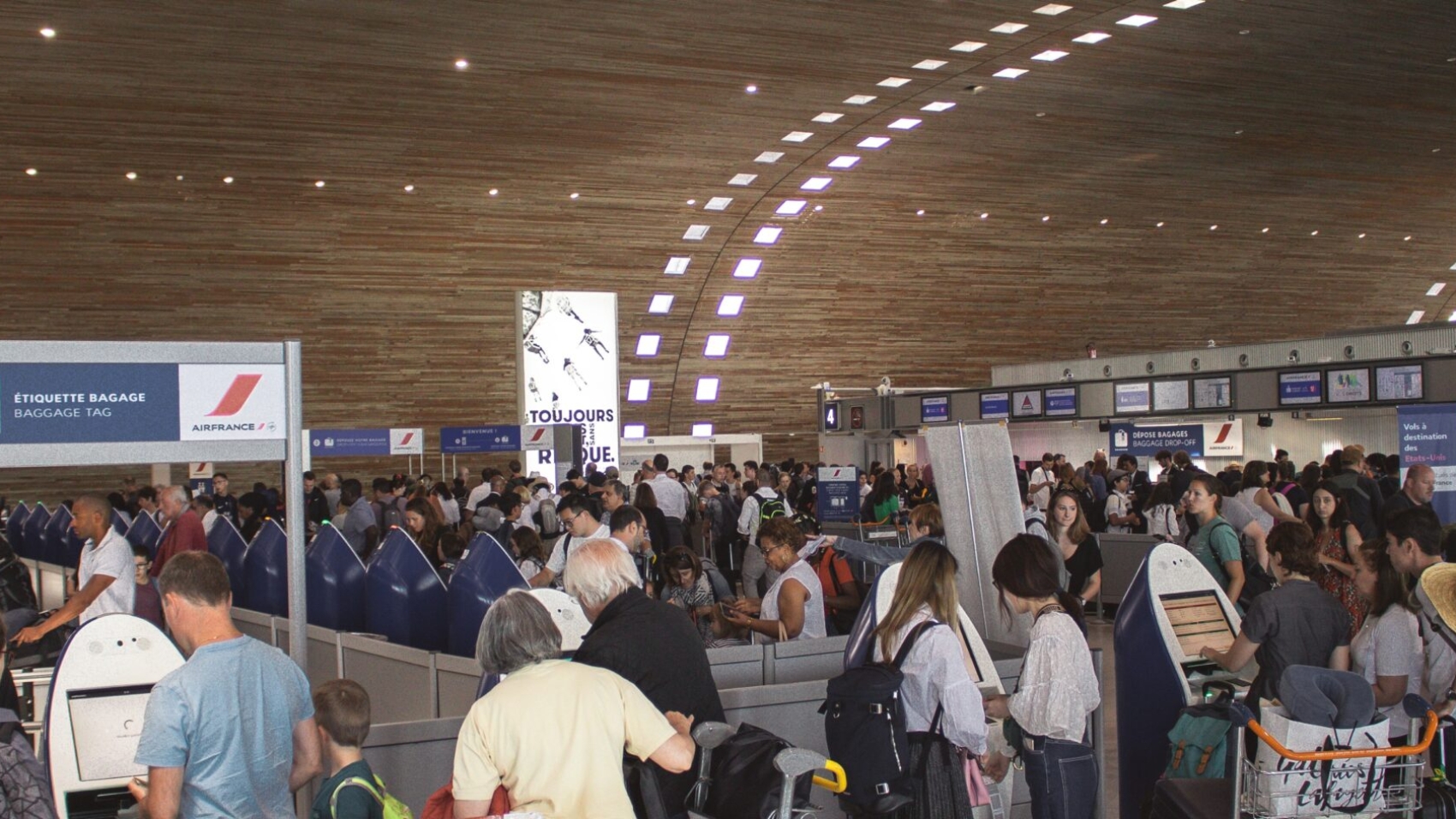
Crowded check-in hall and long queues—why travelers prefer self-service re-accommodation on mobile.

Why Do Modern Travelers Expect Self-Service Re-accommodation?

Disruption in Air travel — whether delays, cancellations, or diversions — are no longer exceptional. With today’s digital-first travelers, expectations have changed. They desire speedy, open, and self-service options when their trips are disrupted. With over 80% of passengers opting for mobile notifications and self-service capabilities, those old-fashioned call centers and long lines at the airport are no longer sufficient.

This is where self-service re-accommodation comes into play, allowing passengers to rebook flights, seek refunds, or modify services immediately from their own devices.

Why Passengers expect Self-Service

Air travel has evolved from airline-focused to passenger-focused. Modern travelers inhabit a digital-first lifestyle — they conduct their finances with mobile banking, send food orders at the touch of an app, and get real-time reports from virtually every service used. So of course they carry the same expectation into their air travel experience as well

Passengers like self-service because it provides them with:

Control – Rather than standing for hours in lines at airports or holding for hours on the phone with call centers, travelers need to be able to immediately correct disruptions themselves. Rebooking onto the next available flight or rerouting is an example. Having control eliminates frustration and anxiety.

Speed and Convenience – Time is a premium for modern travelers. Self-service disruption portals allow them to check updates, confirm a new itinerary, or request refunds instantly — all from their mobile device. This immediacy aligns with the fast-paced lifestyle of today’s passengers.

Personalization – Flying is not one-size-fits-all. Customers expect rebooking choices to suit their interests, fare type, or loyalty program. A regular flyer might anticipate priority rebooking, while a group would appreciate being seated together. Self-service means that the choices are worthwhile and appropriate.

Transparency – Trust is established when travelers have unobstructed visibility into what choices are available — whether it’s flight options, vouchers, or compensation. Transparency not only simplifies anxiety in the disruption but also enhances overall brand image.

At its core, re-accommodation is no longer simply the means by which airlines respond when things break down. It has become a way to give passengers the power of digital tools that enable them to take control of their experience in real time. Airlines that allow this freedom not only alleviate traveler tension but also reinforce loyalty in an extremely competitive industry.

How VoyagerAid Facilitates Successful Re-accommodation

Exceeding these requirements demands more than an entry-level portal. VoyagerAid is capable of enabling passengers and airlines alike with a smart, adaptable platform.

Capabilities include:

  • Accept & Confirm – Automated acceptance of rebooked flights.
  • Decline & Request Alternatives – Ability to select other options.
  • Policy-Based Rebooking – Rules-based automation aligns with the airline’s priorities on cost, inventory, and scheduling.
  • Passenger Prioritization – Distinct treatment for business, leisure, frequent flyers, or special assistance requirements.
  • Baggage & Special Requests – Smooth seat, meal, or additional service updates.
  • Real-Time System Sync – Synchronization with airline PSS, CRM, and other systems to maintain consistency across operations.

Disruptions get sorted sooner, passengers are kept in charge, and airlines lower stress on staff and resources with VoyagerAid.

How Airlines Benefit from a Self-Service Portal

As passengers take charge, airlines also unlock essential business and operational benefits:

  • Preventive Disruption Management – Advanced analytics enable airlines to pre-plan alternatives.
  • Reduced Handling Costs – Less call center peaks and shorter lines minimize labor requirements.
  • Intelligent Recovery Decisions – AI optimizes cost, punctuality, and customer experience.
  • Priority Management – Loyalty program members and special needs customers receive personalized attention.
  • Real-time Communication – Mobile-led notifications keep travelers in the know.
  • Streamlined Compensation – Automated processes enable quicker compliance and refunds.

For airlines, a self-service portal is more than an added convenience – it’s a strategic investment in resilience, efficiency, and customer trust.

5 Ways Airlines Can Reduce Disruption Costs

  1. Minimize Customer Service Workload

Call centers and airport desks are usually inundated with passenger inquiries during disruptions. A re-accommodation self-service portal moves most of these requests to the web, where passengers self-manage confirm, modify, or cancel flights. This minimizes the burden on employees, reduces overtime and outsourcing expenses, and leaves agents free for complex, high-value cases.

  1. Reduce Compensation and Accommodation Costs

Disruptions tend to result in costly hotel accommodation, meal vouchers, or regulatory settlements. With self-service technology, airlines can offer passengers several rebooking alternatives — for example, partner airline codeshare or parallel routes — that are cost-effective yet tolerable to customers. This balance allows airlines to reduce out-of-pocket disruption costs while maintaining customer satisfaction.

  1. Optimize Inventory and Revenue Recovery

In traditional disruption management, accessible seats and routes are not always optimized. A digital gateway driven by revenue management intelligence maximizes aircraft utilization, safeguards premium cabins for high-value passengers, and minimizes undue revenue leakage. Thus, airlines recover sooner and maintain profitability during irregular operations.

  1. Fast-Track Resolution and Minimize Complexity

Each delayed minute raises costs — from crew overtime to airport gate charges. Self-service rebooking takes seconds, avoiding lines and cascading network impacts. Reduced passenger redistribution time normalizes operations rapidly, keeping airlines from soaring costs associated with extended disruption management. 

  1. Unleash Predictive Analytics for Smarter Planning

Self-service platforms provide valuable insights on passenger choices, likes, and cost trade-offs. Such insights can be leveraged by the airlines to predict future costs of disruption, improve policies, and formulate proactive strategies. In the long run, predictive analytics facilitates more intelligent planning — converting disruptions from reactive firefighting into proactive cost management.

Conclusion

Disruption is unavoidable, but the response of airlines determines loyalty, reputation, and profitability. Today’s traveler demands quick, digital-led solutions, and those airlines that don’t get it risk being left in the dust.

With VoyagerAid, airlines can flip disruptions into advantages — saving money, simplifying operations, and providing the smooth, hassle-free experiences travelers now expect.

Self-service is no longer a choice. It’s the future of airline disruption management.

Digital timetable delay notice using passenger scoring models to optimize compensation.

Reducing operational cost with efficient scoring model

Flight disruption can quickly turn from operational issues into expensive, customer-service nightmares. From rebooking the passengers to handling compensation claims, airlines have to act quickly, remain open, and maintain costs-simultaneously.

What if you were able to make these decisions smarter, not faster?

That’s where efficient passenger scoring models come in. By combining real-time passenger data, predictive insights, and automated rebooking & compensation workflows, airlines can prioritize the right travelers at the right time-while significantly reducing operational costs.

In this article, we’ll explore how modern scoring models work, why they’re a game-changer for disruption recovery, and how they integrate with airline disruption management systems to deliver both financial and customer experience wins.

Key Takeaways

  • Passenger scoring models maximize business priority during disruptions, minimizing resource waste.
  • Automation and scoring minimize operational expense while enhancing passenger rebooking and accommodation.
  • Predictive insights and real-time communication maximize passenger experience and trigger higher NPS.
  • Integration with new-generation airline disruption management solutions maximizes smarter, faster, and data-driven disruption management.

What Are Passenger Scoring Models?

Passenger scoring models are statistically driven models that enable airlines to prioritize passengers during flight disruptions according to value, priority, and disruption severity. The models take various factors into account, including:

  • Loyalty status and frequent flyer tier
  • Ticket type and travel class
  • Flight connections and layover dependencies
  • Disruption severity and likely delay
  • Compensation eligibility and past behavior

Through analyzing these elements in real time, airlines can re-accommodate and rebook passengers efficiently, rather than utilizing standard first-come-first-served tactics.

Disruption Handling Challenges of Manual Re-accommodation and Compensation

Conventional disruption handling practices are usually prone to inefficiencies:

  • Long delays for passengers
  • Irregular compensation and rebooking decisions
  • Increased operational cost resulting from higher staff workload
  • Reduced passenger satisfaction and NPS

Manual methods fail in large-scale disruptions like bad weather or broad technical delays and are liable to lead the passengers to be frustrated while the operational cost increases.

How Passenger Scoring Models Minimize Operational Costs

Passenger scoring models minimize operational costs by optimizing decisions and aligning resources with passenger value. Some of the main advantages include:

  1. Smarter Prioritization

Prioritize business passengers with connecting flights first, for example. This avoids wasteful expenses caused by overcompensation while allowing the most important passengers to be seated smartly.

  1. Automated Rebooking & Compensation

With Airline compensation management software and automated rebooking & compensation solutions, scoring models enable airlines to automatically rebook passengers and provide suitable compensation.

High-value passengers could receive priority rebooking privileges and enhanced amenities

Leisure or economy passengers get flexible options in tune with cost-effectiveness

  1. Resource Optimization

Automating score-based re-accommodation saves airlines from the calls on call centers and operations, reducing the call center load and operational overhead. With lesser manual interventions, resolution happens quicker, saving staff costs, and reducing operational overhead.

  1. Predictive Passenger Treatment

Blending scoring with predictive intelligence, including flight delay predictor or flight delay and cancellation predictor software, enables airlines to forecast who needs help next and react in advance. This avoids queues, reduces passenger angst, and caps financial exposure.

Real-Time Communication Improves Passenger Scoring

Passenger scoring models perform optimally with real-time airline notification systems and computerized IROPS notification. By conveying alternative flights or compensation immediately:

  • Passengers enjoy timely, personalized notifications
  • Contact center volumes decrease as passengers self-serve through notifications
  • Airlines build trust, even in extreme disruptions
  • Data indicates that passengers who are proactively notified and prioritized score their experience much higher than those processed through generic processes.

Customer Experience and NPS Impact

Airlines using scoring models realize quantifiable gains in passenger satisfaction scores, especially in times of major disruptions and re-accommodation events.

  • Faster resolution = less frustration
  • Transparent, proactive communication = increased loyalty
  • Personalized prioritization = increased rebooking offer and compensation acceptance rates.
  • Passenger scoring doesn’t only save money—it enhances brand image, customer loyalty, and future revenues.

Integrating Passenger Scoring with New Airline Systems

To reap the benefits fully, passenger scoring needs to be integrated into flight disruption management system. The main components are:

  • Automated rebooking and compensation processes (Airline passenger compensation management)
  • Analytics dashboards for operational insight
  • Rule-based decisioning to ensure policy adherence (Rules & Policy Management)
  • Real-time notifications and passenger messaging

The integration allows for airlines to efficiently handle IROPS reaccommodation while maintaining costs within bounds.

Conclusion: VoyagerAid’s Contribution

Effective passenger scoring is changing the way airlines manage disruptions. VoyagerAid uses passenger scoring, automated rebooking & compensation, and real-time passenger messaging to curtail operational expenses, enhance recovery times, and boost customer satisfaction.

By embracing VoyagerAid, airlines develop a competitive advantage, making disruption management a proactive driver of revenue and loyalty rather than a reactive cost center.

Ready to maximize your disruption management and please passengers even in delay? Discover how VoyagerAid can assist your airline in making operational efficiency and passenger experience better today.

Aircraft lineup outside a modern terminal-our top airline disruption management software list.

Top 10 Best Airline Disruption Management Tools for Airlines

Introduction

In 2025, recovery speed defines passenger trust. The latest airline disruption management software helps carriers to predict delays and cancellations, notify travelers instantly, and enable self-service reaccommodation across web, app, and kiosks – cutting call volumes and compensation exposure while protecting brand reputation. This list highlights ten airline disruption management tools known for passenger-facing recovery (no crew legality or equipment swap), so airline teams can evaluate options quickly and choose the right airline management solutions for their network.

Key Takeaways

  • Prioritize true self-service rebooking that respects fare rules, ancillaries, and priorities.
  • Predictive triggers (weather, events/strikes, history) drive earlier offers and smoother recovery – think flight delay and cancellation prediction software that informs action.
  • Omni-channel, automated IROPS notifications (email, SMS, push, WhatsApp) must include deep links to rebook.
  • Voucher/refund automation and airline compensation management software reduce manual effort and chargebacks.
  • Integration breadth, analytics, and time-to-value matter more than long feature checklists.

What is Airline Disruption Management Software?

A platform that anticipates and manages delays/cancellations, communicates tailored options, and executes policy-based, passenger self-service re-accommodation – including alternative flights, vouchers, or refunds – securely synchronized with core airline systems. Modern platforms pair AI disruption prediction for airports and airlines with rules engines to trigger the right action at the right moment.

Key Features to Look For

  • Self-service re-accommodation engine (inventory-aware, policy-driven)
  • Prediction & alerts (weather, predefined events/strikes, historical patterns)
  • Automated IROPS notifications with rebook deep links
  • Voucher/refund orchestration with rules and caps
  • Policy engine (tiers, minors, groups, MCT/connection logic)
  • Analytics & reporting for uptake, recovery time, cost – robust airline data analytics & reporting software

How to Choose the Right Solution

  1. Scope first: Passenger re-accommodation only to accelerate rollout.
  2. Check integrations: PSS/DCS, NDC/EDIFACT, payment/refund, SSO/CRM.
  3. Decide on metrics: Time-to-recover, voucher/refund automation rate, cost per disrupted pax.

Top 10 Best Airline Disruption Management Tools (2025)

1) VoyagerAid – Airline Disruption Management Software

Best for: Carriers prioritizing proactive, policy-based self-service.
Standout: Self-service reaccommodation; AI disruption prediction (weather, predefined events/strikes, historical data); passenger & flight scoring; policy-based vouchers/refunds; automated IROPS notifications via multiple channels; analytics for recovery KPIs.

2) Amadeus – Passenger Recovery / Self Re-accommodation

Best for: Amadeus-stack airlines seeking native flows.
Standout: Inventory-aware passenger journeys, policy-driven options, integrated notifications and ticketing.

3) Sabre – Self-Service & IROPS Reaccommodation

Best for: Sabre carriers standardizing day-of-ops recovery.
Standout: Automated offers, self-service selection, synchronization with Sabre inventory and documents.

4) Plan3

Best for: PSS-agnostic deployments and quick pilots.
Standout: Clean UX for passenger choice; automation layered beside existing stacks; fast time-to-value.

5) 15below

Best for: Deep automated notifications with action-oriented microsites.
Standout: Personalized comms that embed accept/decline/rebook/refund actions tied to the PNR.

6) WNS RePAX

Best for: A services-backed approach to disruption recovery.
Standout: Notify → prioritize → rebook → refund/hotel workflows designed to compress recovery windows.

7) Volantio

Best for: Proactive seat re-assignment and capacity shaping (peaks/overbooking).
Standout: Targeted incentive offers moving passengers to earlier/later services; measurable uptake.

8) Navitaire (New Skies) – Self-Service Flows

Best for: LCCs/hybrids on Navitaire wanting native rebooking journeys.
Standout: Day-of-departure options surfaced directly within airline digital channels.

9) Switchfly – IROPs Management (Passenger Care)

Best for: Mobile-first passenger care complementing rebooking.
Standout: Automated notifications and care workflows that pair with self-service paths.

10) ITS – IROP Reaccommodation

Best for: Ops teams seeking manifest-driven auto-rebook.
Standout: Rapid identification and automated move-to-alternatives for eligible passengers.

Why VoyagerAid Deserves a Spot

VoyagerAid unifies self-service reaccommodation, AI-assisted prediction, passenger/flight scoring, policy-based vouchers/refunds, and automated notifications across channels. The result is faster recovery, lower call volume, and improved NPS – without expanding agent headcount.

Conclusion

Passenger-led recovery is now the fastest route from disruption to resolution. Start with integrations, launch a focused rollout, and scale based on self-service uptake and refund automation. The ten platforms above offer solid paths to modernize recovery and reduce cost per disrupted passenger.