

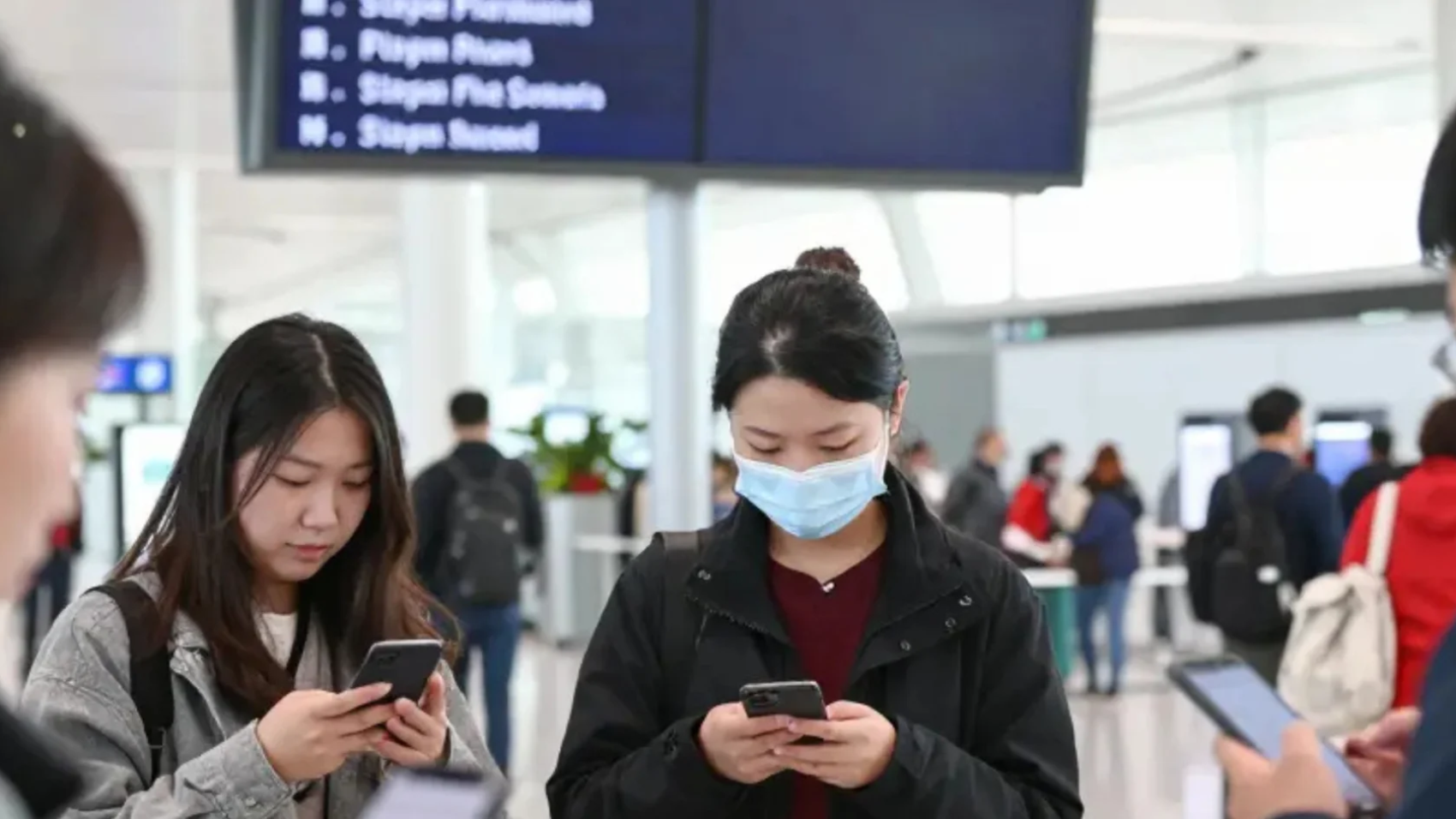
Flight disruptions have ceased to be rare or occur only during specific periods of the year in the airline industry. Flight delays, cancelations, aircraft swaps, crew legality problems, as well as airspace restrictions are now normal occurrences for the majority of airlines around the world. Although disruptions do occur, it is the handling of the disruptions that determines resiliency and customer trust and loyalty.
The modern passenger has a smaller tolerance level for uncertainty. The problem with the disrupted plans of the modern passenger, rather than an unpleasant experience, involves the unavailability of relevant alternatives, information, or control following disruption. The absence of control following the disruption of the plans of the modern passenger creates problems in the following areas.
To overcome these challenges, airlines have turned increasingly to digital recovery models. The implementation of the Self-Service Portal has now become the entry point of modern disruption recovery, especially in large-scale irrops reaccommodation use cases. But not all self-service platforms are made equal. On one hand, they may solve the problem of the customer, but they do not necessarily solve it behind the scenes.
A truly effective recovery from disruption needs a more holistic and integrated approach—one which harmonizes user freedom and airline control, and automation and operations.
Why traditional re-accommodation models break at scale
Airline reaccommodation has, historically, been a manual-oriented workflow that involved multiple employees (airport agents, call-centre representatives and members of the airline’s operation team), all working together to process disrupted passengers, often using separate systems that are not interlinked. However, this method can only support limited numbers of problems. Thus, in the case of larger-scale problems (e.g., weather-related), there are large numbers of people sitting in queues, a great many inbound phones to be answered, and operations teams struggling to manage real-time operational changes. Thus, the time it takes to assign each airline’s reaccommodation flight to a disrupted passenger is significantly delayed due to manual processing, leading to longer recovery times and increased passenger frustration.
Furthermore, with traditional/legacy systems and models, the means by which airlines nade decisions related to passenger handling, inventory, and operational constraints is segregated by function. Thus, the decisions made can often be inconsistent or duplicated, and due to the urgent nature of making such decisions, there is an increased likelihood of making errors when attempting to recover passengers from the massive number of carriers.
As disruption volumes increase globally, airlines are recognizing that manual recovery is no longer operationally sustainable.
What Airlines Expect From a Modern Self-Service Rebooking Capability
Airlines are now treating self-service rebooking not just as something to provide customers with convenience, but also as a strategically important operational competence that must consistently perform under considerable pressure.
Airlines generally want passengers to be able to make their own decisions regarding the resolution of travel disruptions without having to involve agents in the decision-making process for every single rebooking scenario. Airlines, however, will only extend this level of independence to passengers if there are well-defined boundaries. Airlines cannot allow for unregulated actions that may lead to displacement or violations of airline policies nor can they allow for any type of operational conflict downstream.
Airlines need to employ solutions that make sure that every choice a passenger makes is compliant with the airline’s policies, aware of the airline’s inventory status, and feasible from an operational perspective. Solutions also need to be consistent between digital channels (websites), airport desks/counters, and contact centres to ensure that the end results of the recovery process do not differ depending on how or where a passenger interacts with the airline. As the volume of travel disruptions continues to grow, airlines will increasingly view the products offered within the recovery tool category as components of a larger airline disruption management software. Self-service rebooking will need to operate seamlessly within this larger system by aligning recovery processes with the operational constraints of the airline’s network and by supporting airline operations and enforcing airline policy.
The most critical of these issues is providing the operations teams of the airline with complete visibility and control over self-service options. Self-service tools should reduce the operational burden on airlines and not create new operational risks for airlines.
What “End-to-End” Really Means in Self-Service Reaccommodation
Although the term end-to-end is often used ambiguously within the airline industry when discussing technology, it is far more precise when discussing disruption recovery. The definition of end-to-end self-service reaccommodation is much broader than merely allowing a passenger to change flight reservations themselves.
An actual end-to-end self-service reaccommodation begins at the point of disruption detection and eligibility verification. Every passenger will not qualify for the same recovery option and that eligibility should be determined automatically through an analysis of fare rules, ticket conditions, the passenger’s loyalty status with the airline, as well as federal regulatory requirements.
From there, recovery options need to be created dynamically by using current and live inventory, taking into consideration operational limitations and business rules defined by the airline’s policies. Passengers should have some choice over their recovery option, but it should be done in a controlled manner that does not endanger the operational integrity of the airline.
Finally, once a passenger has selected a recovery option that satisfies the above criteria, the selected recovery option will need to be updated instantaneously across all related systems. Partial or manual automation creates operational risk rather than eliminating it altogether.
Inside an Airline-Grade Self-Service Reaccommodation Flow
An airline-grade re-booking process has been created to assist airline customers during extensive disruption events with ease.
Automated detection for disruption (e.g., schedule changes, cancelations, delays, etc.) initiates the process and travelers eligible for re-accommodation are notified to digitally view available options on a variety of platforms (web, mobile + Apps).
The options for re-accommodation are based on real-time inputs via the system, as well as airline recovery rules to avoid presenting options for travelers that are not feasible or ADA-compliant; upon receiving travelers’ selections; inventories; travel records, and any corresponding connections will be updated instantaneously and automatically without requiring additional actions by the airport contact center team.
Because of the ability to provide a refined “closed loop” process, and assist travelers/lender agencies in recovering from significant disruption events while providing stability, while also providing more efficient operations at the same time.
Where Basic Self-Service Portals Fall Short
There has been a growing trend toward the use of self-service options; however, these are often ineffective in the context of complex disruptions. One reason this occurs is that many self-service options only focus on passenger inventory as their primary function, failing to include important aspects such as crew legality, aircraft availability, and operational logistics. Airlines using these options generally find that, under high-stress situations, they do not meet the airlines’ objectives for an integrated recovery solution and begin looking for more comprehensive methods of disruption management.
As a result, there are several cases where passengers can successfully rebook themselves through self-service options, but when operations staff access the information later, they find that the recovery solutions are no longer valid based on crew legality and/or other operational constraints. Furthermore, the lack of timely synchronization between the self-service and operations systems creates additional issues that require manual reconciliation and increase the potential for errors.
During large-scale irops (i.e., massive flight disruptions involving many passengers) reaccommodation events, these issues create significant visibility for all parties involved. What may initially seem to be a more efficient method of recovery can actually lead to greater complexity and cause the airline to violate their recovery goals while not providing any benefits.
How VoyagerAid Enables Controlled, End-to-End Self-Service Recovery
VoyagerAid integrates self-service booking solutions as part of its Disruption Recovery Framework, treating Passenger Recovery as an interconnected process. Rather than considering Passengers, Crew Members, and Aircraft separately, VoyagerAid enables users to collaboratively manage Recovery for all three components using a single platform.
Recovery options provided to affected travellers are based on Pre-Defined Policies established by Airline Management and Real-Time Operational Data captured by the CAO during the event. Additionally, VoyagerAid ensures that the ability for Passengers to initiate their Recovery independently does not negatively affect operational viability.
VoyagerAid allows Airline Operations Control Centre Staff to maintain real-time oversight of ongoing Recovery and provides detailed tracking of who has recovered and how. By providing airlines with instant synchronization of Recovery Plans across multiple systems, VoyagerAid has removed the need for any Manual Interventions once a Passenger has confirmed their Recovery and has enabled them to scale their Recovery Operations beyond their normal operations, resulting in increased confidence even during protracted or widespread Disruption Events.
Operational and Experience Impact for Airlines
Measuring the effect of an effective end-to-end self-service recovery model is easy through both Operational and Passenger Experiences.
For airlines, the key operational benefits are more rapid recovery times, less reliance on airport & call centre staff, and less manual work effort during incidents. Airlines can devote their attention to turning exceptions into solutions rather than dealing with each passenger’s needs on a case-by-case basis.
At the same time, passengers experience greater confidence during difficult times through the availability of timely options and the clarity of resolution. When they feel informed and empowered, they are generally more satisfied, even when incidents occur.
Long term, airlines will become more knowledgeable about the performance of their recovery effort and will have the ability to develop continuous improvements and better preparedness for future disruptions based on data gathered about the performance of their recovery efforts.
The Future of Airline Recovery: Automation With Control
Airlines will no longer rely on reactive disruption management software; rather, next-generation disruption management software will be proactive. These tools will be capable of predicting the impact of disruptions, coordinating recovery efforts across multiple systems, and providing scaled self-service options without disrupting airline operations.
As disruption activity increases, airlines will need to adapt their recovery strategies accordingly. The future of disruption management will revolve around intelligent automated solutions. These automated systems will be capable of predicting the needs of recovery and generating compliant options while guiding passengers through the recovery process without losing oversight over the recovery activity by the airline.
In future airlines, self-service capabilities will not serve as a stand-alone digital offering; instead, they will be integral to the process of recovering from disruptions through intelligent systems that automatically guide passengers through their recovery. By investing in fully integrated recovery orchestration today, airlines will position themselves better to manage the complex operating environments of tomorrow.
Conclusion
The advent of an airline’s self-service portal as an enabler of controlled and scalable recovery is an effective way to provide customers with greater autonomy while maintaining operational structure. End-to-end self-service rebooking builds on the airline’s previous capabilities by combin ing existing technology with human expertise, allowing airlines to utilize their workforce in a broader range of areas while leaving many of the repetitive functions to automated systems.
Airlines that want to continue developing new features for their self-service portals will likely be able to introduce genuinely integrated products that support a coordinated and automated recovery process, which is more automated than ever before.