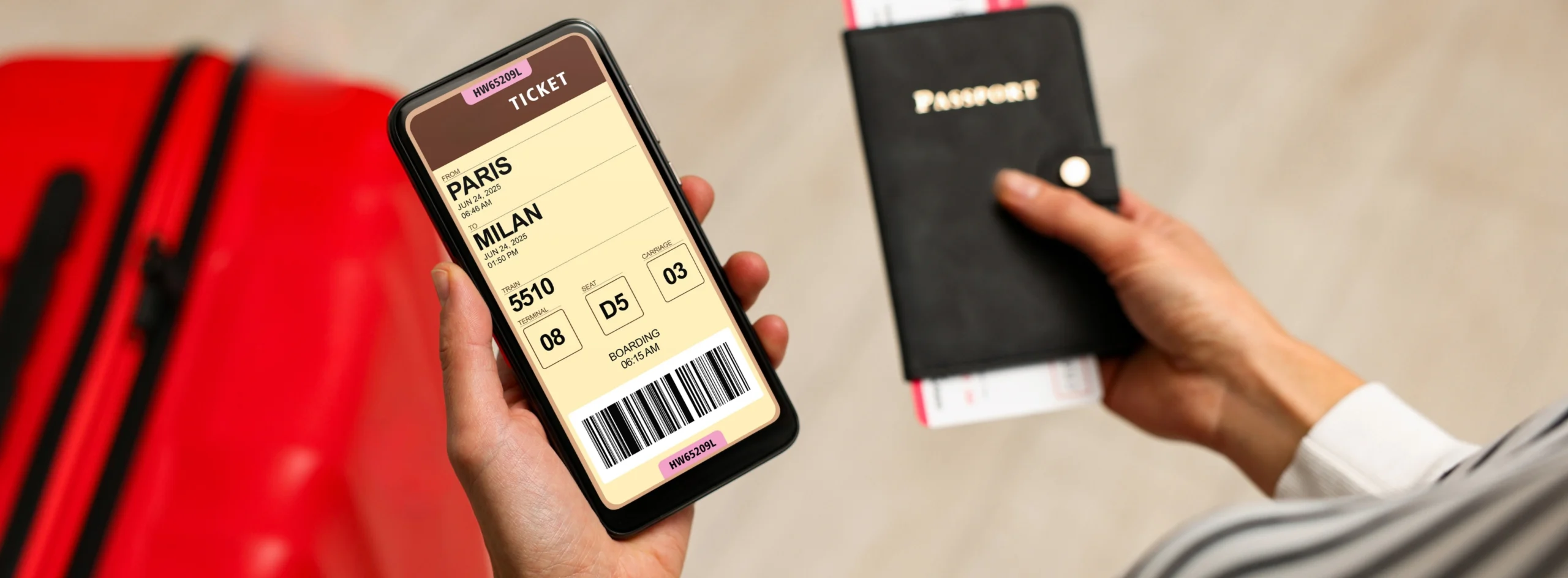


Flight disruptions aren’t new-but what passengers expect during those disruptions has changed more in the last two years than it has in the past two decades.
In 2025 alone, 36% of air travelers were hit with cancellations, up from 24% in 2023. That means one out of every three passengers walked into an airport in 2025 and experienced a disruption that likely ruined their schedule, their mood, or sometimes their whole trip.
Yet the greater surprise is this:
In fact, only one in three passengers reported satisfaction with how airlines communicated, proving that the real frustration isn’t just the delay — it’s the silence, the uncertainty, and the feeling of being left alone to figure things out.
And here’s another powerful insight:
For 64% of passengers, SMS is the preferred first notification of delay because it works instantly, even without Wi-Fi or data.
Put it all together, and the message is loud and clear:
Passengers want airlines to communicate better, faster, and more personally – especially when things get chaotic.
This blog breaks down, in detail, what passengers expect when delays and cancellations occur, what the insights of 2025 reveal, and how modern solutions such as Predictive Disruption Intelligence, Self-Service Portals, airline AI chatbots, and real-time notification systems enable airlines to meet those expectations.
Key Takeaways
- Passengers judge airlines more on disruption handling than on flight service.
- 64% Prefer SMS-first Communication During Delays.
- Self-service, chatbots, and predictive intelligence are now table-stakes capabilities.
- More than ever, real-time updates and just rules count.
- VoyagerAid serves airlines seeking to modernize disruption management end-to-end.
Rising Passenger Expectations in the Era of Real-Time Communication
For passengers, the biggest frustration isn’t always the delay-it’s the lack of information.
They don’t want a vague “stay tuned.” They want clarity, and they want it now.
Real-Time Passenger Communication has become a necessity for this reason.
Passengers expect:
- Instant notifications
- Channel-specific updates: SMS, WhatsApp, email, app
- Clear timelines
- Correct reasoning
- And since 64% prefer SMS, an automated real-time airline notification system becomes the backbone of trust.
Whether it is a delay of 20 minutes or a full flight cancellation, automated IROPS notifications provide what passengers want most: certainty in uncertain moments.
Instant Digital Support via Smarter Airline Chatbots
When disruption hits, many thousands of passengers turn to call centers at the same time, and overload is inevitable.
Yet passengers expect immediate assistance.
This is exactly where airline AI chatbots shine.
A modern airline chatbot can answer:
- “What’s my new gate?”
- “Can I get a refund?”
- “Can I get on an earlier flight?”
- “Where is my baggage?”
And it can answer these questions instantly — for thousands of passengers at once.
The best airline chatbot does not replace human agents.
It supports them by handling repetitive questions, allowing human staff to focus on unique or sensitive cases.
Passengers feel that they have been heard.
Airlines decrease pressure.
Everyone wins.
Self-Service Reaccommodation as a Core Passenger Priority
Think about how passengers behave today:
They book online, check-in online, pick seats online, upgrade online — it’s all digital.
Thus, in cases of flight disruption, queuing up becomes unnecessary and an outdated practice.
- Passengers expect to:
- Rebook themselves
- Change flights
- Change seats
- Request refunds
- View compensation options
- A self-service reaccommodation portal gives that to travelers in an instant.
It turns a stressful moment into a manageable one by removing long queues, call center overload, and confusion.
Self-service reaccommodation isn’t a “nice to have” anymore.
To passengers, it is a given in 2025.
Predictive Disruption Intelligence Transforming Passenger Confidence
Passengers today feel very strongly that airlines should know things before they happen.
And with technology in evolution, they’re not wrong.
With Predictive Disruption Intelligence, airlines can predict:
- Weather-related issues
- Crew legality conflicts
- Turnaround delays
- ATC constraints
- Aircraft rotation problems
- A reliable flight delay predictor allows flights to take action hours sooner and allows the traveler to adjust plans with less disruption.
Proactive handling doesn’t remove the disruption —
It removes the frustration.
Consistent, Policy-Led Decision Making during IROPS Events
Passengers judge fairness quickly:
- “Why did that person get rebooked first?”
- “Why did they get a hotel but I didn’t?”
- “Why was compensation denied?”
The Rules & Policy Management engine removes all bias.
It ensures that:
- Priority handling is uniform.
- Compensation logic is automated.
- Fare rules are applied correctly.
- Rebooking follows clear guidelines.
Passengers may not love the outcome every time…
But they always appreciate transparency.
Seamless Rebooking and Compensation Through Automation
Indeed, nothing annoys passengers more than waiting for weeks for refunds.
This feels unacceptable in a digital world.
Automated Rebooking & Compensation tools help airlines:
- Issue Vouchers Immediately
- Process refunds in minutes
- Apply appropriate airline policies.
- Reduce paperwork
- Avoid delays in financial settlements.
Fast compensation = faster forgiveness.
And in airline disruption management, forgiveness is priceless.
Data-Driven Insights to Improve the Passenger Disruption Experience
Today, passengers not only want improved communication.
They want airlines to make the next disruption better, too.
Analytics and reporting software help airlines:
- Understand patterns
- Improve the timing of communications
- Reduce misalignment between teams
- Analyze compensation trends
- Benchmark recovery speed
A smart IROPS Dashboard provides the airline with insights that continually help in improving service recovery.
Towards elevating airline service standards with modern disruption management systems
VoyagerAid is built around precisely what the modern traveller expects.
It puts predictive intelligence, automation, and self-service into one streamlined platform for the modern airline to manage disruptions.
VoyagerAid supports airlines with:
- Predictive Disruption Intelligence
- Self-Service Re-accommodation
- Real-Time Passenger
- Communication
- Airline Chatbots
- Automated Rebooking & Compensation
- Rules & Policy Automation
- Analytics & IROPS Dashboards
It enables airlines to recover faster, communicate better, and turn disruption management from stressful to a positive passenger experience.
Conclusion: Passenger Expectations Are Higher Than Ever
Disruptions aren’t going away; if anything, they’re increasing. But frustration need not rise with them. Passengers want transparency, speed, fairness, and control. Airlines that provide these can build loyalty, even in worst-case IROPS events. The next era of airline customer experience belongs to the airlines that will communicate better, react faster and empower passengers with self-service tools. And with AI-powered disruption management like VoyagerAid meeting these expectations has never been so achievable.